At first I thought that I hadn't done much in 2021. Except for hiking, biking, ice skating, swimming, and slowly getting back to working.
But apparently I did quite a lot of stuff, and unusually much for other people.
Last year's summing up was thematic, but this year I will do it by month instead.
January
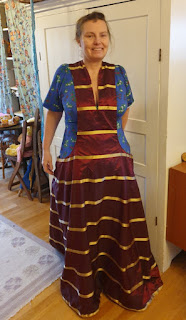
In January I started on my biggest costuming project this year: what ended up to be not only one, but two Spanish 12th century outfits. Or one and a half. I spent much of the time embroidering on the sleeves on my shift.
The first part to be made was the surcoat, which is called pellote. All hand sewn, from silk and lined with wool.
February
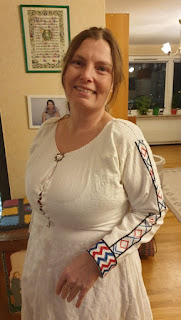
The embroidered 13th century Spanish shift, which I made slightly supportive by quilting to layers of linen together in over the bust area, and making it tight was finished in February. And it turned out that I shouldn't have bothered: the saya keeps everything in place just fine.
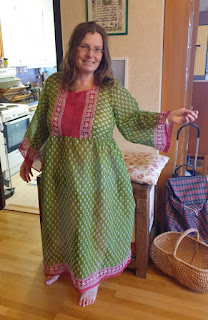
I also made an everyday dress from Indian cotton. It took some clever pieceing to use the borders.
This dress was part of an obsession with making modern wear inspired by c. 1900 reform dress. This obsession continued into March, where I made three reform inspired dresses for everyday wear.
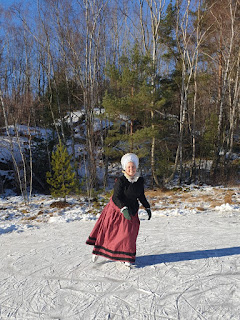
The coldspell in February put a little bit of fire under me, so I also made an early 17th century doublet, and and attempt at 17th century Dutch headwear, to take some photos of me ice skating.
More about that
here- with a video!
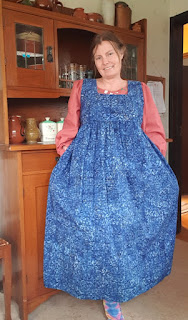
MarchThe obsession with reform dresses for modern wear continued.
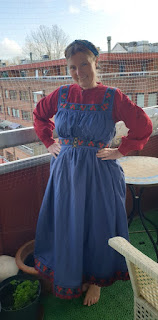
Here I am actually two of the dresses at the same time. A pink cotton dress with painted flowers on under a blue dress in cotton batik from Bali. I lived in that blue dress much of the year.
The pink dress on its own, I mostly wore it with the tie belt.
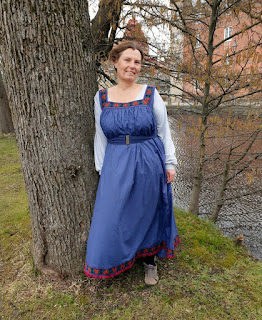
The third dress is also from cotton, with a lovely flower trim that I bought in a charity shop. There is also vintage two-coloured cotton fringe at the bottom, from
Göteborgs Remfabrik. In the top photo I am wearing a grey jersey top with a slight puff sleeve, that I also made. The belt is borrowed from a coat, since I hadn't made a belt yet.
With a blouse from H&M and a tie belt.
I also made a new regency petticoat in March, since I felt that I couldn't use the same petticoat that I made in 2006 to
all my dresses. This one is in silk, so a little bit more fancy.
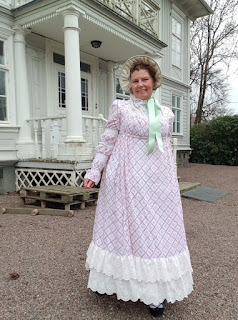
And I made a new, totally insane dress from c. 1815 (
more here).
It still lacked the insane hat, from the fashion plate that was my inspiration, but it will come further down in this post.
April
I made a red blouse to wear under the blue reform dress. Here yopu also can see the blet that I made for it with the same trim as on the dress.
But mostly I was busy with work training, and as much hiking and swimming as was possible ;)
May
In the beginning of May I made my first 15th century Italian dress for a couple of years. It was also the first time I did hair taping for many years. It is hand sewn from hand wocen cotton and cotton/linen mix ( the sleeves). The bodice has a lining of tightly woven linen to make it more supportive.
I also made a reversible sleeveless spencer and a turban to wear with my Regency ballgown that I made in December 2020. (Page about the whole thing
here)
The other side of the spencer got its first outing when hubby and I went to a cabin in the woods, and took some fairy inspired photos - you can see them
here.
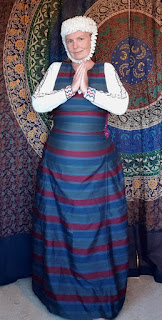
JuneIn June I finished the first of my 13th century Spanish saya encordatas. It is hand sewn from striped wool. And I made the rather special headwear.
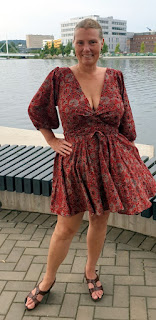
I also made a dress for midsummer. It's a lovely, thin Ajrak cotton from India.
July
I went on a biking holiday. And made new shorts for this, from an African print that I bought when I visited a flea market at an allotment garden.
I made a hand sewn medieval linen shirt for my husband from linen sheets (modern, hardly used) that I found at a charity shop.
I also finally acquired fabric for the everyday apron, and and another bodice for my folk costume, more on that later.
August
By August my 13th century Spanish clothes were all finished.
These outfits have quite a lot of documentation, and detail images on
their own page.
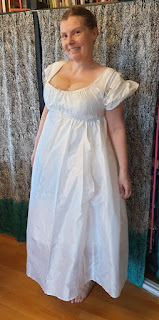
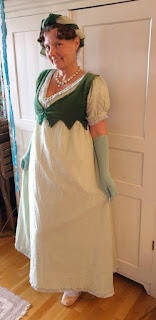
While I didn't blog about it until September I made a new white muslin dress, and a petticoat which only has straps insted of a bodice in August.
I also made a canezou (a sort of over blouse) from old linen curtains that were a gift from a neighbour, and a cap from some kind of weird broderie anglaise pieces that I found at a charity shop, plus remnants of an old dress.
Photos with various accessories: the canezon, my sleeveless spencer from May, and another velvet bodice from last year.
In August I also made modern garments:
A skirt for me from green cotton, and I painted a border with flowers and grasses along the hem.
I made a skirt for my best friend, because this piece of batik fabric that I found at a charity shop just screamed her name.
My mother's partner, who flies a lot and has his own small plane turned 75, so I made him a shirt.
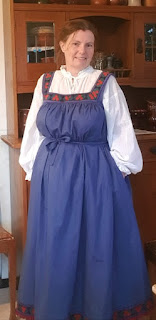
And I made the everyday apron for my folk costume, and also gave
the web page for it a much needed overhaul.
September
September was apparently a month dedicated to two things: empire, and my folk costume.
I finished the insane hat for my checked dress from c. 1815, and took photos, but I apperently haven't posted them, or updated the webpage.
I also made a 1790s round gown. Bad photo showing the whole thing:
Photo and video when I have actually put on some more appropriate things to wear with it.
In the folk costume field I made the new bodice, and two new aprons, and also embroidered a piece of tulle that is part of the headwear, and which I have had the material for for 20 years, but never got around to making. I thought that it was going to be more difficult than it was.
I also started on 16th century (and viking) clothing for my friend Måns and his son Vidar.
October
In late October I went to the Netherlands for Drachenwald's Crown Tourney (SCA stuff). I have some
photos here, including of my outifts, which weren't new, but I looked pretty.
I made matching waffenrocks for Måns and Vidar, plus a shirt, and a viking wrap coat for Vidar. Unfortunately I have no photo of the viking coat. You can see the waffenrocks if you follow the link to the photos from the Crown Tourney. Here is a photo of Vidar's waffenrock.
I also made a spencer from pinted cotton.
Finally I took some new fantasy photos that I am very proud of, even if the only new thing really is the black belt with silver paint on.
November
November meant lots of inspiration for SCA things, and mostly sewing for other people. I made another shirt and two braies for Visar, and a shirt and a pair of braies for Måns.
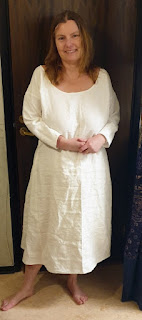
I then realised that I also needed new underwear, so another shift was hand sewn from the same thrifted linen bed sheets that I made Rickard's shirt from in the summer.
Wearing 12th century to Autumn Crown also made me realize waht I wanted to make from a piece of really thin turqouise silk that I had: A 12th century undergown.
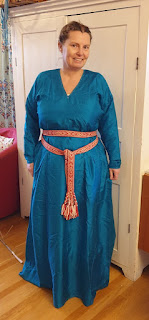
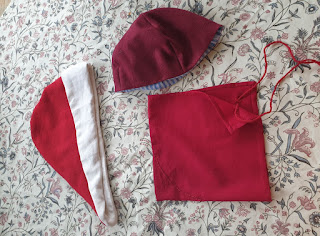
I also made no less than four red caps. You see, when you travel almost four days together in a car to and from an event with the same people you are bound to become very silly. So durign the trip my travel companions and I founded the informal household Haus Rotkäppchen (Red Riding Hood), named after the cheap, but good Germna bubbly of that name. And of course everyone needs to have a red hat when drinking.
So I made viking caps for Erich and Elisabet, and a bycocket for Daniel.
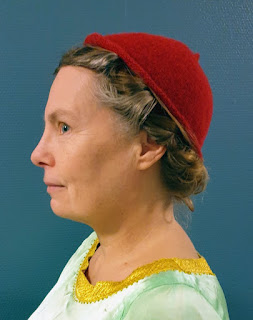
For myself I knitted a small cap, based on Italian 14th century art.
I have made a pattern fopr it, which will be posted here in February.
My friend Johanna liked my cap so much that I knitted one for her too.
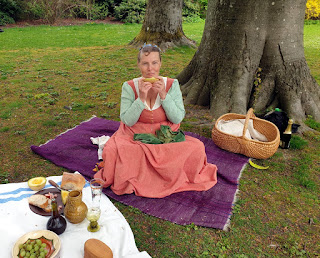
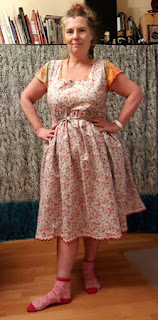
I also made a modern apron dress.
December
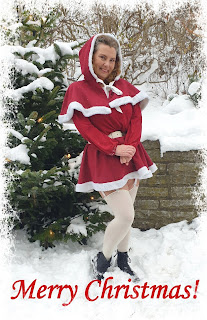
December means making the annual christmas themed photoshoot - and clothing.
The cape and skirt are made from an old 14th century wool gown that I made in 1998, and which doesn't fit me anymore.
I also made a christmas apron from a thrifted curtain, and a wool skirt for my folk costume and a modern apron dress. And knit a new scarf from thrifted yarn.
And finally: I made a very ...erhmm... useful headpiece from a plastic diadem, cable ties, spray paint, glue, star foam stickers and insane amounts of glitter.


,%20c.%201336-1341.jpg)